
Finspång Castle: Inside Jacquette Gyldenstolpe’s Childhood Home
Posted on August 5, 2026 in Butterfly Games, Characters, Jacquette, Newsletter, Travel
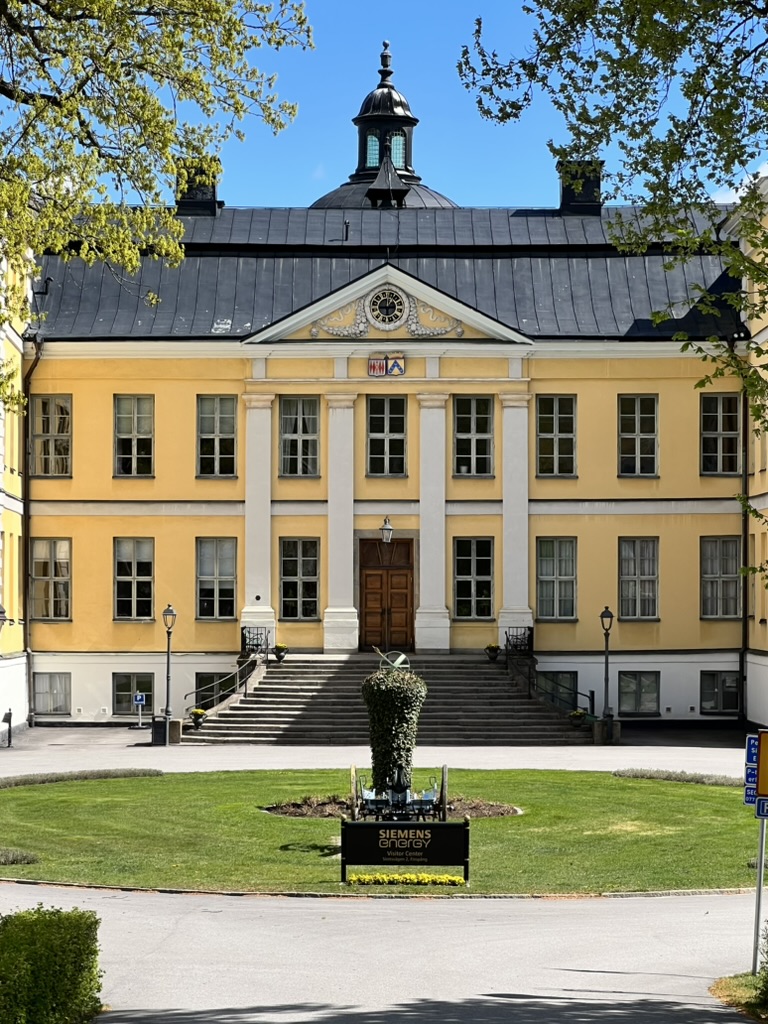
If Drottningholm Palace is where Jacquette Gyldenstolpe first steps into the glittering danger of the Swedish royal court in Chapter 1 of Butterfly Games, then Finspång Castle is the place that shaped her.
During her life, Jacquette experienced some of her greatest happiness at Finspång. She also returned there when life dealt her its harshest blows.
Finspång was not a royal palace like Drottningholm. It was something almost more interesting: a noble family estate, an industrial center, a social landmark, and one of the real places behind my biographical historical novel.
It was Jacquette’s childhood home, where her mother’s family had lived for more than a century.
And it was where her story began.
A Swedish Castle Unlike Any Other
Finspång Castle—Finspångs slott in Swedish—is in Östergötland, northwest of Norrköping.
The present manor house was built for Louis De Geer the younger between 1668 and 1685. Its restrained architecture reflects the Dutch heritage of the De Geer family, whose members became some of the most influential industrialists in Sweden. Today, the castle is used as offices of Siemens AG (connected with Finspång’s turbine industry) rather than as a public museum. The surrounding park, however, is open to visitors throughout the year.
The castle was built on a narrow island surrounded by branches of the Finspång River. Visitors approaching the entrance would have seen not only an imposing noble residence but also the blast furnace, mill, hammers, and other workings of the family’s industrial enterprise.
Behind the castle lay a very different landscape: gardens, elegant walks, ornamental buildings, and, eventually, an English-style park.
The English park was developed during the 1790s under Jean Jacques De Geer and his wife, Jacquette’s grandmother Aurora Taube De Geer. Its surviving features include the Aurora Temple, the Lugnet summerhouse, and an orangery.
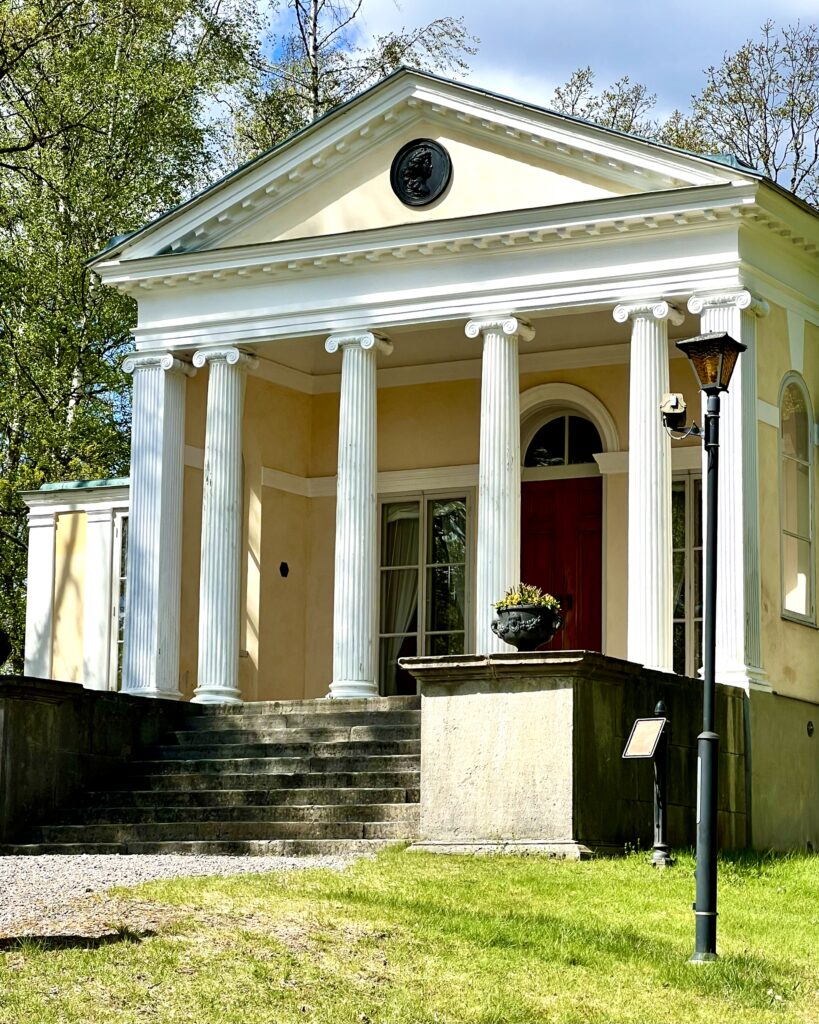
It is difficult to imagine a better setting for a historical novel. On one side: furnaces, cannons, workers, money, and industry. On the other: music, gardens, paintings, and aristocratic luxury.
At Finspång, those worlds existed side by side.
The Family Behind Finspång
Finspång’s history was closely connected to Jacquette’s mother’s family, the De Geers.
The family was of Walloon and Dutch origin. During the seventeenth century, Louis De Geer and the skilled workers recruited to Sweden helped develop Finspång into one of the country’s most important centers of iron and arms production.
The ironworks became especially famous for cannons and cannonballs. Production on such a scale created an immense fortune, but it also came with equally immense responsibilities. Hundreds of people depended upon the estate. Furnaces had to remain active, orders had to be filled, and debts had to be paid.
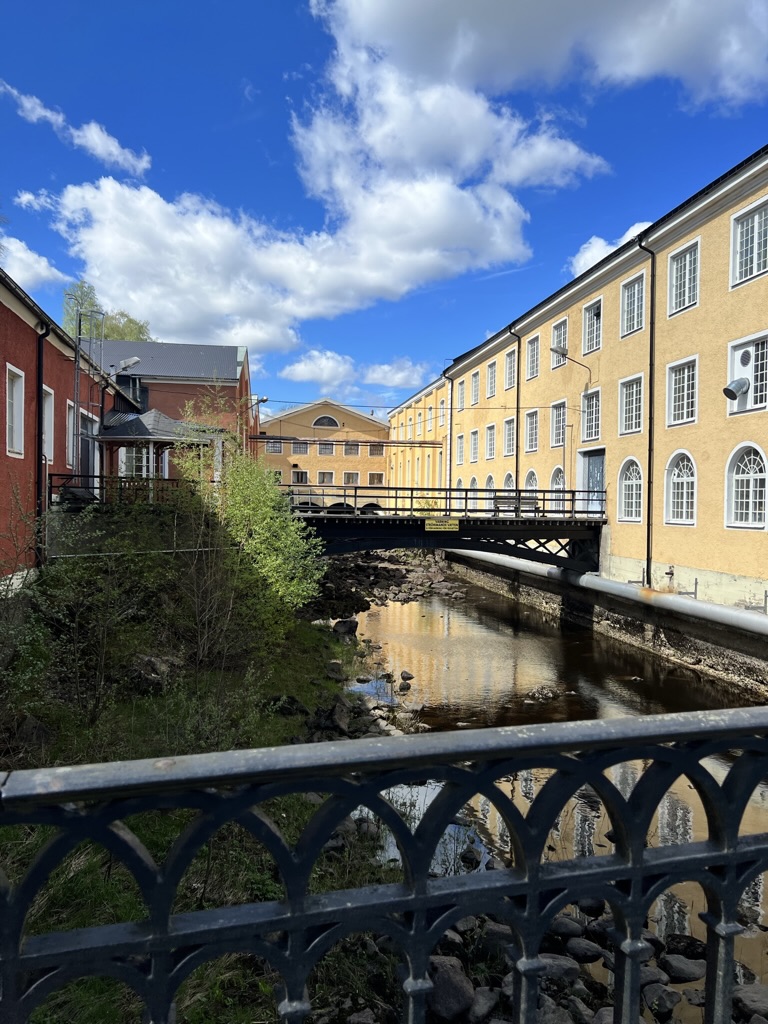
Finspång was therefore more than a beautiful country house. It was the center of an economic world.
That contrast helped me understand Jacquette while I was writing Butterfly Games. She came from two worlds that did not always fit comfortably together in early-nineteenth-century Sweden.
By birth, she belonged to the aristocracy. She was expected to speak French, dance gracefully, play music, understand court etiquette, and marry well.
But the fortune behind that elegant existence came from iron.
Growing Up at Finspång Castle
Jacquette was connected to Finspång through her mother, Aurora De Geer, and her maternal aunt, Emilie De Geer.
She spent much of her childhood there while her parents remained absorbed in court life and their increasingly unhappy marriage. Her Aunt Emilie became one of the most important figures in her early years.
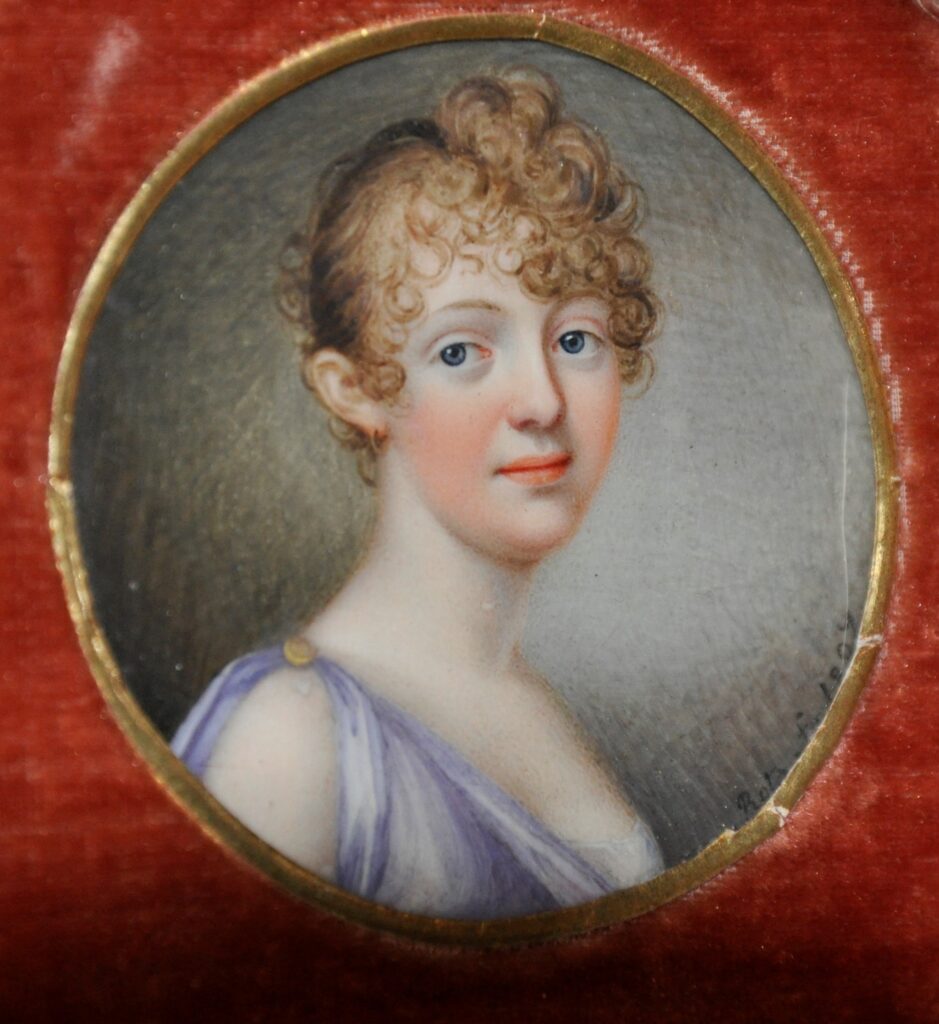
Emilie taught Jacquette to dance, act, and play the harp. Within the castle walls, Jacquette absorbed the music, books, paintings, and manners expected of a young countess. Distinguished artists and visitors passed through Finspång, leaving behind both memories and works of art.
Yet Jacquette rarely saw her parents.
After they divorced in 1811, her brothers went to live with their father. Jacquette remained within her mother’s family’s world, separated from her brothers and increasingly aware that the adults around her had their own secrets.
Until she was fourteen years old, she was far removed from the glittering world of Stockholm Palace.
That is exactly the sort of childhood that gives a novelist material. It leaves a mark.
Uneasy Contrasts: Castles and Cannons
When I began researching Jacquette’s life, I was fascinated by the physical layout of Finspång.
From the castle entrance, the De Geer family could see the industrial complex that sustained their wealth. Behind the house, they could retreat down steps from the rear terrace into the carefully designed castle park.
The contrast was impossible to ignore.
Inside, young women practiced music, French, dancing, and courtly manners. The castle contained beautiful furniture, portraits, and works by important artists.
Outside, iron was cast. Workers and their families depended upon the success of the estate. Debts accumulated. Political alliances shifted. Europe was at war with Napoleon.
Finspång was spectacular, but it was never innocent.
It was beautiful because it was wealthy, and it was wealthy because it was industrial.
That tension became part of the emotional landscape of Butterfly Games. Jacquette grows up surrounded by luxury, but luxury does not protect her from loneliness. She belongs to a powerful family, but that does not give her power over her own future.
The adults around her understand that property, marriage, influence, and affection are often intertwined.
Jacquette will have to learn the same lesson.
Finspång’s Role in Butterfly Games
Finspång matters in the novel because it belongs to Jacquette’s family world.
Drottningholm Palace represents the seductive danger of the royal court. It is where she first encounters Prince Oscar and begins to imagine a future that should be impossible.
Finspång represents something more complicated.
It is home—but home is never simple.
It is the place where Jacquette was raised, the inheritance over which her family argued, and the refuge to which she repeatedly returned. It is associated with childhood loneliness, family ambition, romance, grief, and some of the most consequential moments of her life.
Finspång also brought her into frequent contact with the new Bernadotte dynasty. Crown Prince Charles Jean—the former French marshal Jean-Baptiste Bernadotte—and his son Oscar visited the estate several times.
One of those visits would place eighteen-year-old Jacquette in the role of hostess to the prince who had already changed her life.
A young countess.
A prince.
A family castle.
A foundry casting the image of Sweden’s new dynasty.
You can probably see the scenes beginning to click into place.
That, however, is a story for another post.
Visiting Finspång Castle Today
Finspång Castle is not generally open to the public because the manor house remains in use as offices. The castle park is open year-round and contains several historic structures, including the Aurora Temple, the Lugnet summerhouse, and the orangery.
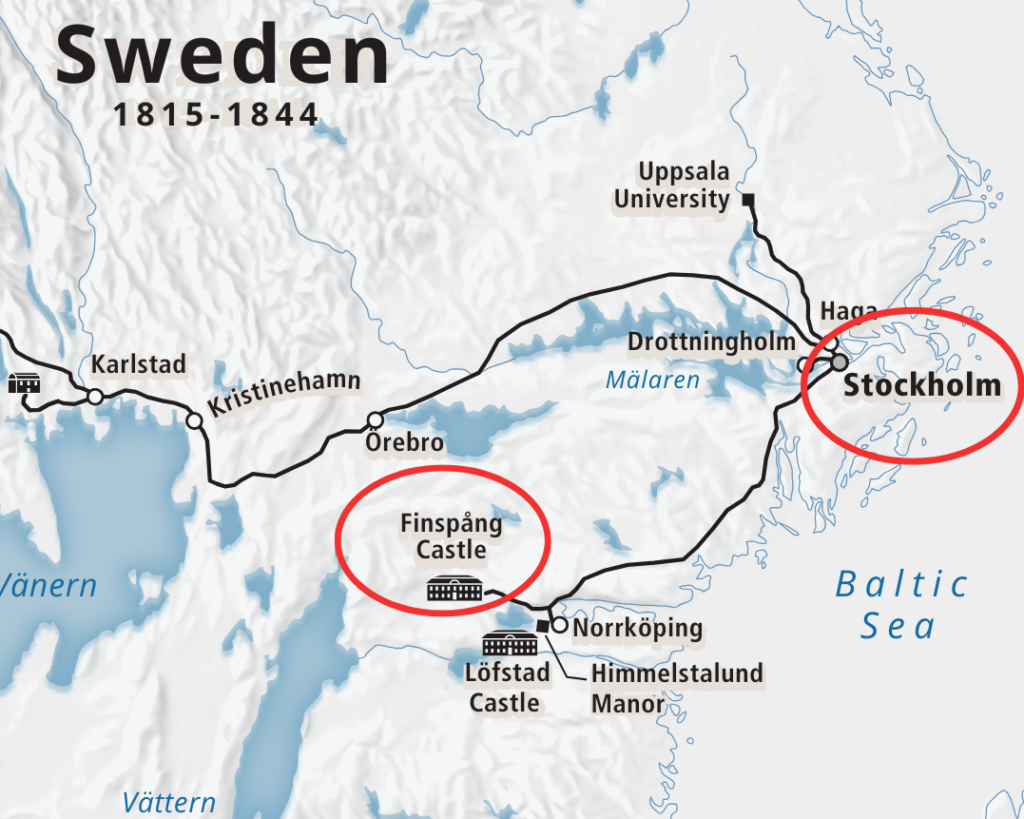
Even without entering the house, visitors can experience the unusual relationship between the castle, the park, the river, and the surrounding industrial town.
Go on a pleasant summer day. Take the train from Stockholm to Norrköping, where rental cars are available.
Bring a picnic.
Walk through the park and look back toward the castle.
And think of a lonely girl growing up inside it—learning to dance, play the harp, observe the adults around her, and conceal what she felt.
Before Jacquette entered the Swedish royal court, Finspång had already taught her that love, family, money, and power could never be entirely separated.
In Butterfly Games, love is the most dangerous move.
At Finspång, you can see why it was irresistible to a girl like Jacquette.