
The Fact and Fiction Behind Jacquette and Oscar’s First Meeting at Drottningholm
Posted on July 4, 2026 in Butterfly Games, Jacquette
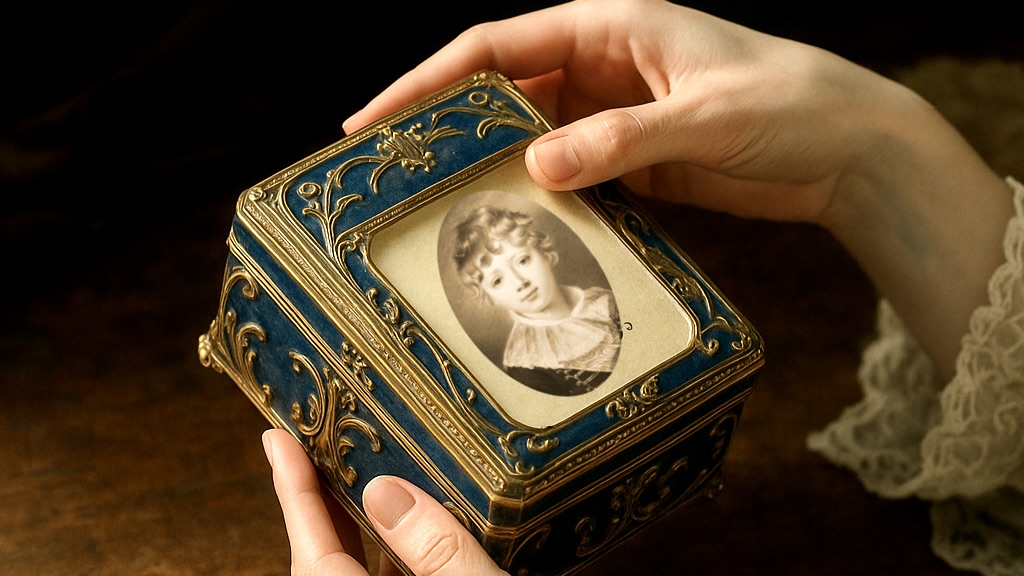
On July 4, as America celebrates its 250th birthday, I’m thinking about another pair of birthdays—two young people born on the same day, two years apart, whose lives would become entangled in one of those relationships that history remembers.
Jacquette Gyldenstolpe and Prince Oscar Bernadotte were real people. Their relationship became part of Swedish court legend. But what history rarely gives us is the first moment.
The first glance.
The first conversation.
The instant when a girl who wanted nothing to do with court life found herself face-to-face with a boy who had been turned, almost overnight, into the future of a kingdom.
That is where Butterfly Games begins: in the space between fact and fiction, on the grounds of Drottningholm Palace in the summer of 1811.
How a real Swedish court legend became the opening spark of Butterfly Games.
Drottningholm is not merely a pretty backdrop. It is one of those places that seems designed for secrets. The palace stands on Lovön, near Stockholm, and has been a royal residence since the 1660s. Today it is a UNESCO World Heritage site, celebrated for its palace, theatre, Chinese Pavilion, and gardens—an ensemble UNESCO calls one of the finest examples of an eighteenth-century northern European royal residence inspired by Versailles.
In my historical novel, Butterfly Games, Drottningholm is a summer world: close enough to Stockholm to feel political, far enough from the city to let people behave as if the rules have relaxed. Jacquette arrives there on Midsummer Eve in 1811 and stays in the Church Pavilion—“The Birdcage”—with the queen’s young maids of honor, a clique I call the Chatterati. She is almost fourteen, lonely, humiliated by her parents’ scandalous divorce, and determined not to be consumed by the royal court.
The history behind the story is real. Sweden in 1811 was still living in the aftermath of a political crisis. King Gustav IV Adolf had been arrested, deposed, and expelled from Sweden in 1809 after the disastrous loss of Finland. Into that uncertainty came Jean Baptiste Bernadotte—Charles Jean in my novel—a French soldier, former Marshal of the Empire under Napoleon, and newly chosen heir to the Swedish throne. His son Oscar was critical to his selection because Oscar made the succession secure, so long as he could behave himself—and survive.
So, when Jacquette meets Oscar in Butterfly Games, she is not simply meeting a handsome French boy with dark curls. She is meeting the symbol of a new dynasty.
Oscar, too, is out of place. He is a “commoner-turned-prince” who misses Paris and his mother, Crown Princess Désirée. He agrees not to betray Jacquette to the guards, helps her hide a letter box she shouldn’t be holding, and becomes her accomplice before he becomes anything else.
From there, the meeting becomes the seed of everything.
This is the heart of historical fiction for me: the facts tell us that Jacquette and Oscar shared a birthday, that they became entangled at court, and that their relationship was remembered. The fictional retelling asks what kind of beginning could have made Jacquette never look back.
The answer I imagined was Drottningholm.
Read Butterfly Games and step into that summer of 1811. Read it now.