Aurora Taube at Finspång: The Hostess Who Made the Castle Famous
Posted on October 6, 2026 in Butterfly Games

It’s October, and if you imagine that it’s 1820, Jacquette and her family are about to leave Finspång Castle and return to Stockholm for the season. Why? The castle has tile stoves, but it is not well-heated, and the roads typically get muddy by late fall. Not to mention the wolves, who get hungry after the snows come.
But to understand Finspång Castle—and the family world Jacquette inherited—we need to meet the woman who made it famous: her grandmother, Aurora Taube.

If you missed Part 1 of my Finspång Castle series, and are interested in Finspång Castle, Jacquette Gyldenstolpe’s childhood home, my post is here.
To know Jacquette’s happiest moments and her struggles, meeting Finspång Castle’s magical women is essential. In my historical novel Butterfly Games, Jacquette must overcome the taint of scandal, and people continually judge (and misjudge) the De Geer women. Want to know why?
We must go back further in time to the 1780s, when another woman made Finspång the place to be.
Her name was Fredrika Aurora Taube De Geer, and she was Jacquette’s grandmother, the celebrated mother of Aurora and Emilie. She was born a countess and kept her birth name, Aurora Taube, throughout her life.
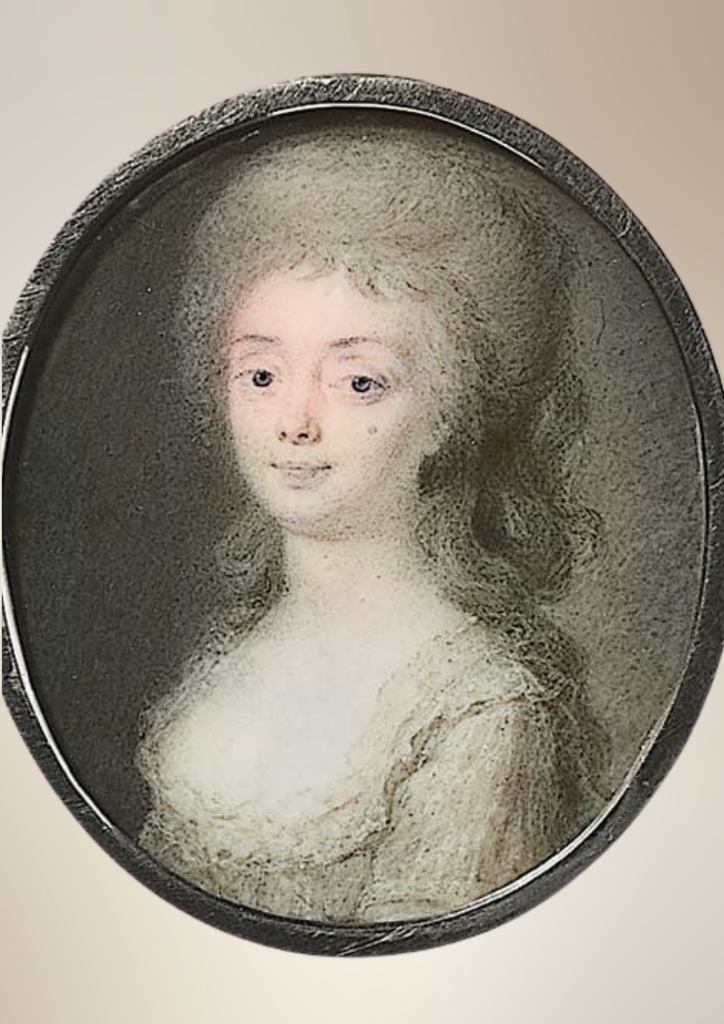
You probably can tell that I’m drawn to women whose reputations are a little bit checkered. Aurora Taube was exactly that sort of woman: beautiful, charming, theatrical, generous, much discussed, and not always popular.
In 1769, at barely sixteen, she married Jean Jacques De Geer of Finspång, Jacquette’s maternal grandfather. Aurora Taube was young, aristocratic, and famous for her beauty. Her husband was much older (31, nearly twice her age) and heir to one of Sweden’s great industrial estates. Nobody had taught her a single thing she would need to succeed.
An only child, Aurora Taube was eleven when the second of her parents died. She was wealthy, with a mamsell, a lady’s maid, and a male servant of her own. She studied music, drawing, and penmanship, under three French masters. Her lineage destined her for notoriety—her aunt, Countess Hedvig Taube, had two sons with King Frederick I and was his official mistress, one of only two official royal mistresses in Swedish history.
Within a year, a manager at the Finspång iron works wrote her husband a memorandum on the estate’s finances and had a lot to say about her. She was only an inexperienced girl, he said. He warned, “[a] handsome wife, lots of money, a young and quick wit are all too attractive treasures in a young man’s head.” She knew nothing of domestic life, so Funck recommended Cajsa Warg’s cookbook (!), told De Geer to watch who came to the house, and added that a man who takes a young girl should be prepared to bring her up.
That’s how society treated troublesome women.
Aurora Taube never bothered to learn any of that. Instead, she did something else. She quickly became known as a generous and charming hostess, and the De Geer parties were talked about even in royal circles. She used her talents in the only way society allowed, and her family benefitted enormously.
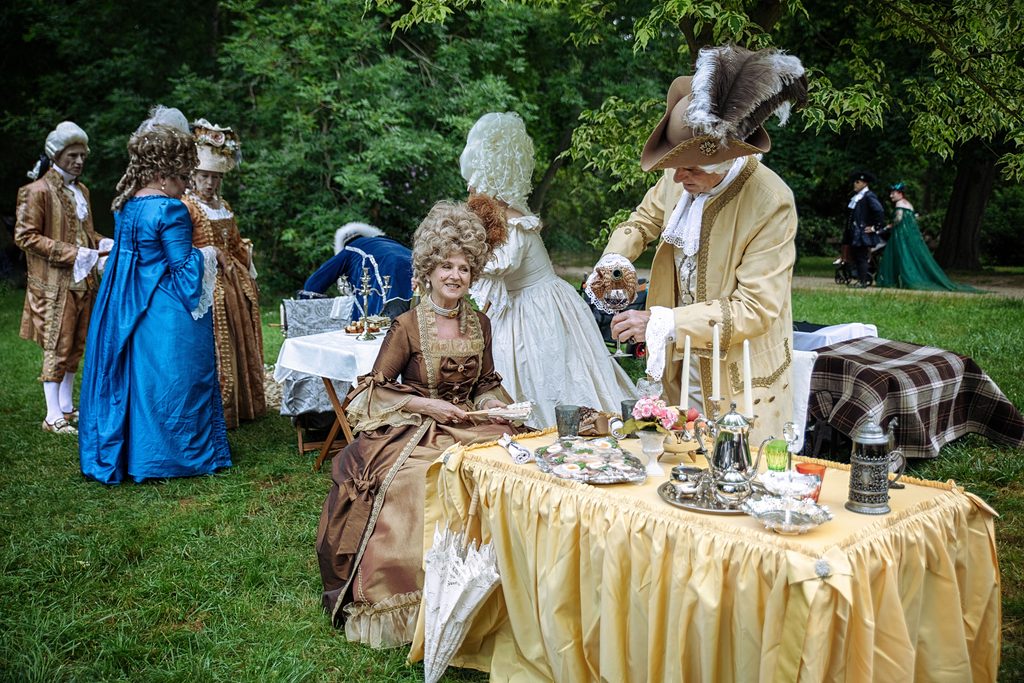
Malla Silfverstolpe, the famous diarist, was a friend Emilie Dalton, who taught English to Jacquette’s mother and her Aunt Emilie. Governess Dalton apparently enjoyed gossiping about Aurora Taube’s escapades. Malla records a Finspång always full of strangers, Swedish and foreign, where festivities followed one another, tastefully devised and executed as though with a magic wand. Sometimes the ironworks and all the farm labor stopped, because every hand on the estate was needed for the countess’s parties. Her servants and the ironworks staff adored her. Her husband, Malla says, took the credit for a house his wife’s spending was destroying.
Aurora learned fast, didn’t she?
Young Aurora also began renewing Finspång’s interior and garden. Among her early improvements was the transformation of her predecessor’s bed alcove into an elegant bathroom.
At Finspång, she gathered the most famous figures in art, music, and politics. Johan Tobias Sergel, the famous sculptor and draftsman, was basically her artist-in-residence. That’s the modern-day equivalent of having Robert Indiana sleeping in your guest room while working on the Love Statue.
Not bad.

So, Jacquette’s mother, Aurora De Geer, and her aunt, Emilie De Geer, grew up with that sort of reality TV scrutiny. Here’s a sketch Sergel drew of Aurora Taube and her daughters leaving in their carriage.
A castle and a stage
In Aurora Taube’s time, scandal became part of the DNA of the De Geer women.
Only seven years into the marriage, the poet Johan Gabriel Oxenstierna penned a tribute to Aurora when she played the Goddess of War in a performance at Finspång. Translated, his words are: “she is herself, in her own battles, both the battlefield and the heroine.”
On the day Jacquette’s mother was born in September 1779, the future Queen Hedvig Elisabeth Charlotta wrote that De Geer believed the child his “although all the city knows who the father is.”
Ouch.
Ristell, in his Caractères et anecdotes de la cour de Suède, wrote: “The charms of her face and her gracious manners have always attracted a large number of admirers, many of whom have been suspected of not pining in vain.”
The suspicion holds up to scrutiny.
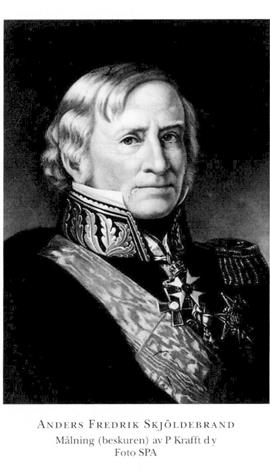
It is well-known that Aurora Taube carried on a seven-year love affair with the young Anders Fredrik Skjöldebrand. Shortly after his wife of one year died in childbirth, he turned to poetry, music and drawing. And that is when Aurora Taube heard of him. Malla Silfverstolpe’s account, through Emilie Dalton, is that “[s]he sought his acquaintance and showed him sympathetic tenderness, and soon filled his whole heart, which for seven years was devoted to her alone, and would probably have been so all his life long, had her fidelity not failed.” She was about 27 and he was 23 when they met, and their relationship lasted until she found another lover.
Emilie Dalton said that Skjöldebrand was the only one who could bring Aurora to her senses.
Aurora Taube said of herself: “As long as I stay away from masquerades, I can leave men alone.”
Maybe that’s what ended it with Anders.
The woman everyone watched
Aurora was admired, but she was also judged. The women of the Gustavian court were watched with a ferocity that makes modern celebrity culture seem tame. Their clothes, flirtations, debts, pregnancies, and friendships all became material for comment.
And how did that affect her granddaughter, Jacquette Gyldenstolpe, heroine of Butterfly Games? Jacquette inherited more than bloodlines. She inherited a family culture in which women could dazzle a room they were trapped in.
When I write scenes about Jacquette, I think often about the women before her: Aurora Taube, Aurora De Geer Wetterstedt and Emilie De Geer Piper. Women whose private longings were never entirely private.
From Aurora to Jacquette
When Jacquette was a young girl, her mother was immersed in a scandalous divorce of her own. Jacquette was placed under Emilie De Geer’s care at Finspång, where Aurora Taube’s presence still lingered. The household, the park, the stories, the theatrical tradition, the very idea of Finspång as a place of beauty and importance — all of it was due to Aurora Taube.
That is why Finspång Castle is the heart of Butterfly Games.
Drottningholm gave Jacquette an entrée to the royal stage.
Finspång gave her the family script.
Be charming, be graceful, be useful, be careful.
Naturally, no one in Butterfly Games is quite careful enough.
Especially Jacquette.