
More Than a Stereotype: Finding the Real Jacquette Gyldenstolpe
Posted on August 20, 2026 in Butterfly Games, Interviews, Jacquette
There is a problem one faces when writing about a woman who had an affair with a prince.
Two hundred years later, it is very easy for the affair to become the whole story.
That was certainly true of Jacquette Gyldenstolpe. When I first came across her name while researching Sweden’s Bernadotte dynasty, she was deemed noteworthy only because of her role in someone else’s life: she was the beautiful young Swedish countess who became the mistress of Crown Prince Oscar.
I frowned. Obviously, there was more.
Who was she before Oscar? What kind of family had she come from? What did she want? And how did a girl born into the Swedish aristocracy at the end of the eighteenth century navigate a world in which men held all the power—but women were certainly not without influence of their own?
Those questions eventually became Butterfly Games.
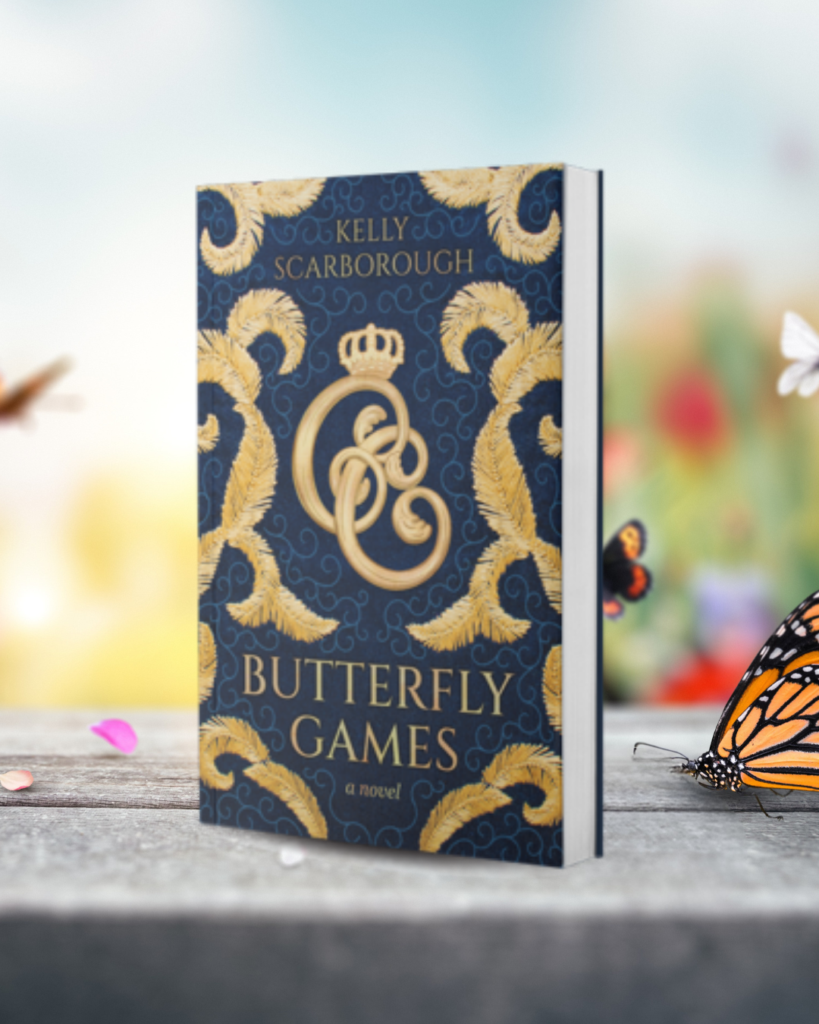
This week, I had the pleasure of talking about Jacquette, Oscar, the real history behind the title Butterfly Games, and what comes next in the series in a new interview with Literary Titan, wonderfully titled “More Than a Stereotype.”
Read my full Literary Titan interview: “More Than a Stereotype”
It Started with a Book Called Désirée
As a teenager, I loved Annemarie Selinko’s Désirée, the novel inspired by Désirée Clary. She was the daughter of a French silk merchant, Napoleon Bonaparte’s former fiancée, and the improbable girl from Marseilles who became Queen of Sweden.
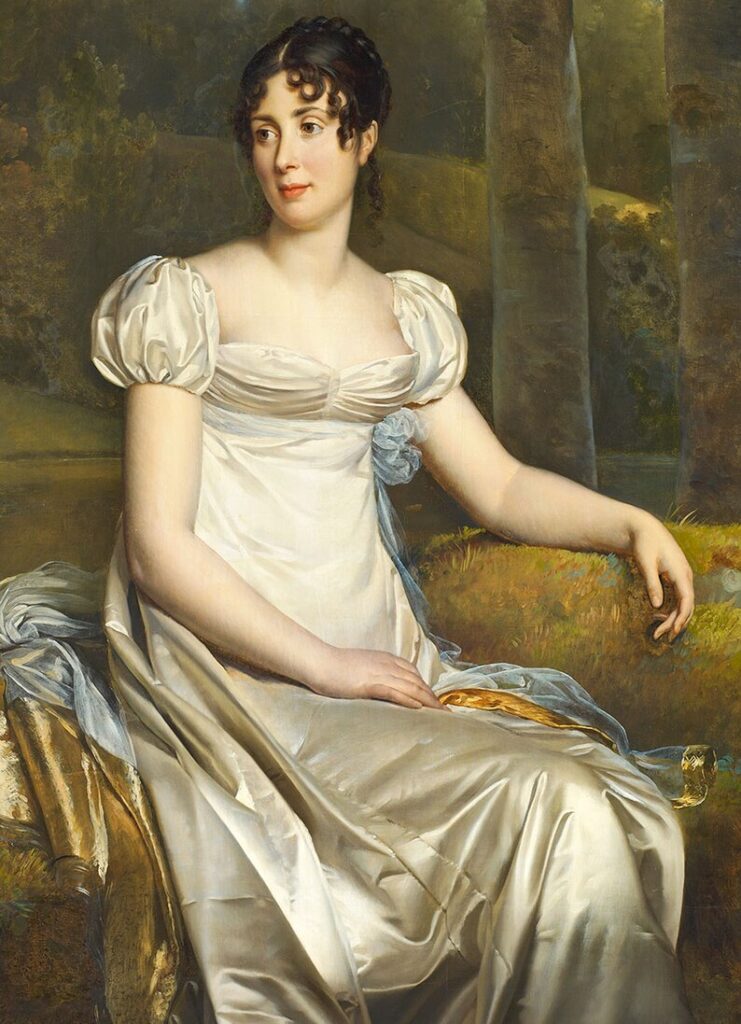
Years later, I started looking into Désirée and the dynasty she helped establish. That research led me to Jacquette.
The Sweden Jacquette inhabited was going through an astonishing transformation. The country had lost Finland to Russia. A king had been deposed. The old royal succession had failed. And Sweden had gone to France and selected one of Napoleon’s marshals, Jean-Baptiste Bernadotte—a commoner by birth—to become its future king.
His son Oscar arrived as a French teenager who had to learn a new language, adapt to a new country, and somehow transform himself into a Swedish prince.
Then there was Jacquette: a daughter of the Swedish aristocracy, yet an outsider in her own way.
Put the two of them at Drottningholm Palace in 1811 and things were bound to become interesting.
They did.
The Real Butterfly Game
Literary Titan also asked something readers frequently ask me: Was the Butterfly Game real?
The truth is my favorite kind of historical fiction answer: yes—and no.
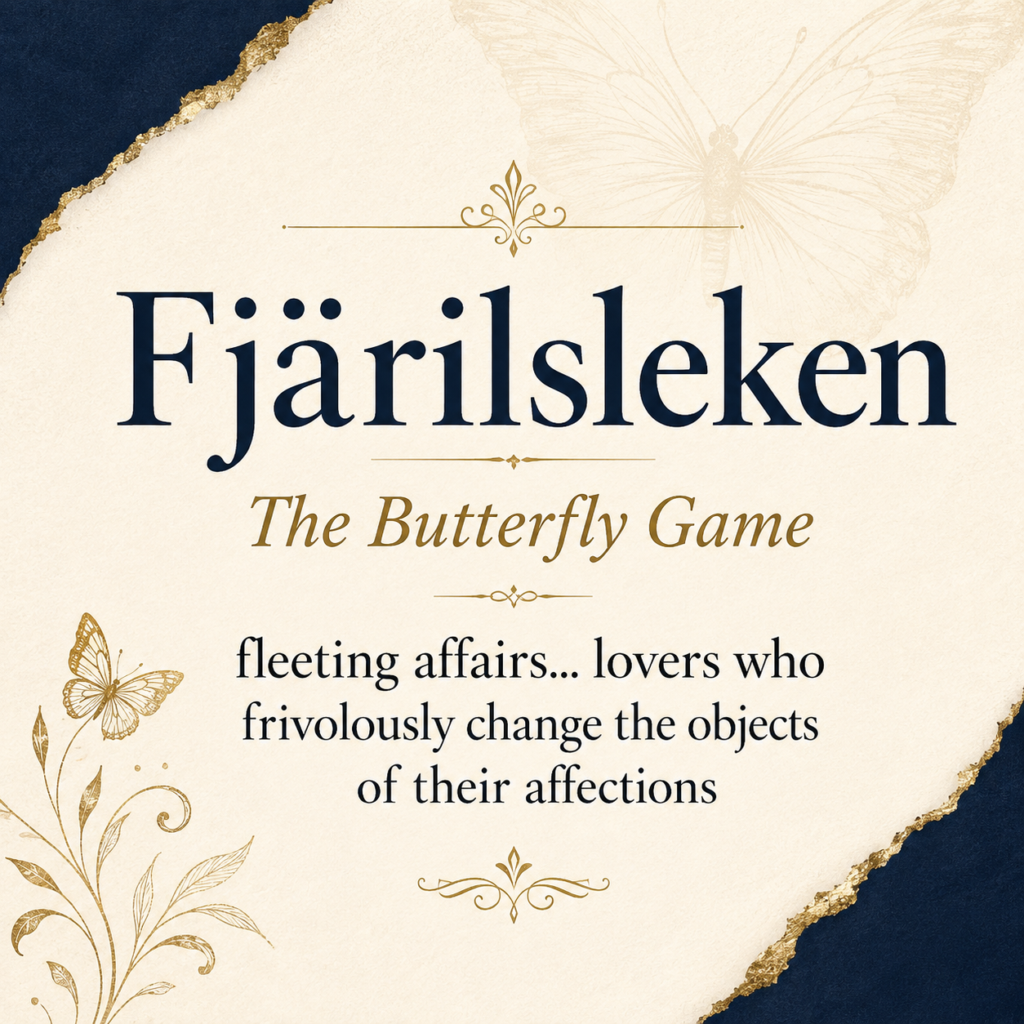
During my research, I learned the Swedish word fjärilsleken, literally “the butterfly game.” I discovered it in material connected with Queen Hedvig Elisabeth Charlotta’s diaries. She’s Queen Charlotte in the book. An entry in a biographical reference used the term to refer to the queen’s husband’s habit of pursuing women at court.
I knew almost immediately that I had my title.
But the larger Butterfly Game in the novel—the web of unwritten rules governing love, marriage, gossip, sex, friendship, information, family connections, and political alliances—is my fictional expansion of that historical phrase.
At Jacquette’s court, a woman might not be able to hold office or own property. She could, however, know exactly who was sleeping with whom, whose marriage was in trouble, which family needed money, who had the ear of the king, and which ambitious courtier desperately needed an introduction.
Useful information that can be turned against anyone. Even Jacquette.
Some things really haven’t changed all that much.
Making Jacquette a Woman of Her Own Time
The greatest challenge—and pleasure—was trying to understand Jacquette herself.
She was born in 1797. I did not want to take a twenty-first-century heroine and call the result historical fiction.
Fortunately, Jacquette and her family left sources.
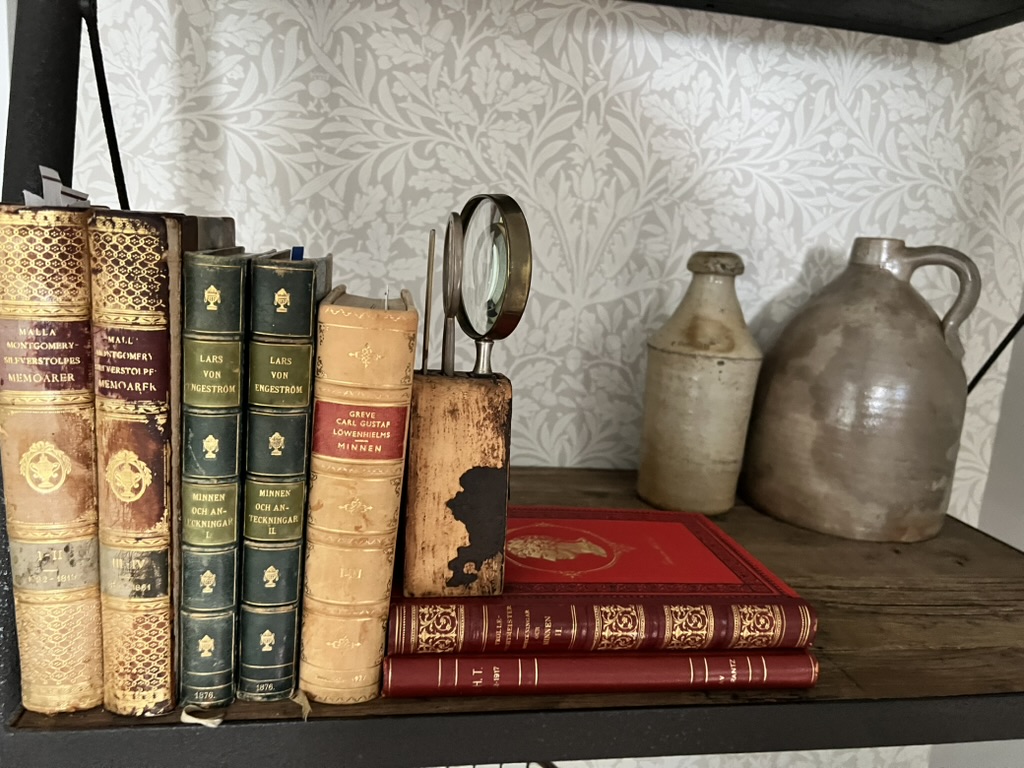
Over years of research, I found hundreds of family letters, along with memoirs, court records, newspapers, and eventually a Swedish-language biography of Jacquette. Those materials helped me reconstruct the framework of her life and the personalities around her.
But archives have limits.
They cannot tell us everything Jacquette said to Oscar when they were alone. They cannot record every private humiliation, every calculation, every moment of jealousy or hope.
And that space between what we can document and what we can reasonably imagine?
That is where the historical novelist gets to work.
I wanted Jacquette’s rebellion to belong to her world. Her choices had to make sense for a young aristocratic woman born in 1797—not for a woman born two centuries later.
And Yes, There Is More Coming
Literary Titan also asked whether Jacquette’s story will continue.
It will.
At the end of Butterfly Games, Jacquette and Oscar have changed—but their story is not finished. Book Two begins with Jacquette as a married woman, while Oscar has just become crown prince and is first in line to the Swedish throne. The choices that once seemed personal have acquired rather larger consequences.
And then, of course, there is Carl Löwenhielm.
Oscar offers one possible life. Carl offers another.
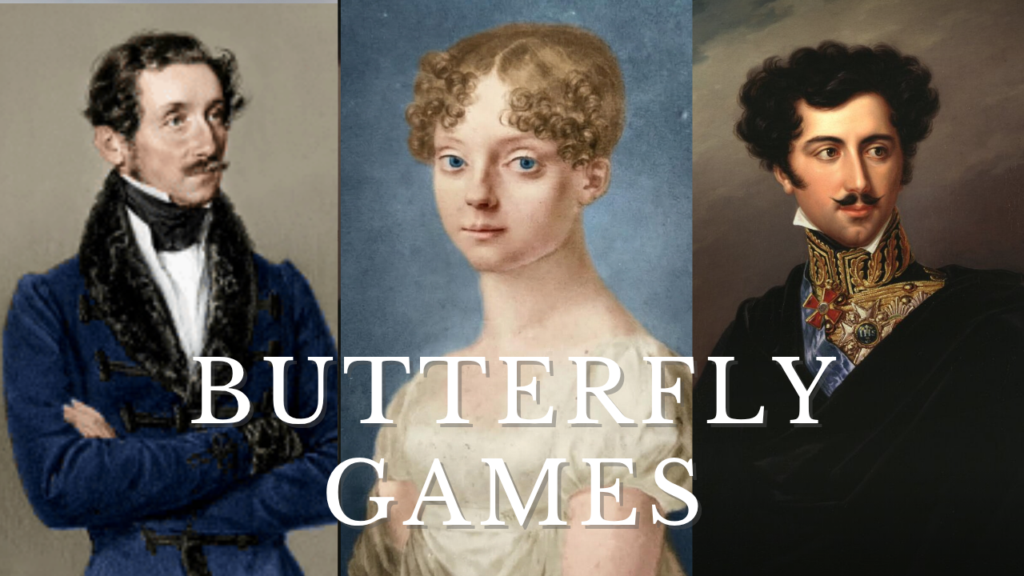
But the question I keep returning to as I write is not simply Team Oscar or Team Carl?
It is Team Jacquette.
What would it mean for her to choose herself?
That is a question I’m having a great deal of fun exploring.
For more about the real Jacquette, how Désirée started this entire adventure, the history behind fjärilsleken, and a few hints about Book Two, you can read my complete conversation with Literary Titan here: