
Axel von Fersen’s Last Days: Marie Antoinette, Jacquette’s Aunt Emilie, and the Real History Behind the Butterfly Games Prequel, The Marshal’s Warning
Posted on June 4, 2026 in Butterfly Games, Jacquette, Monthly Blog
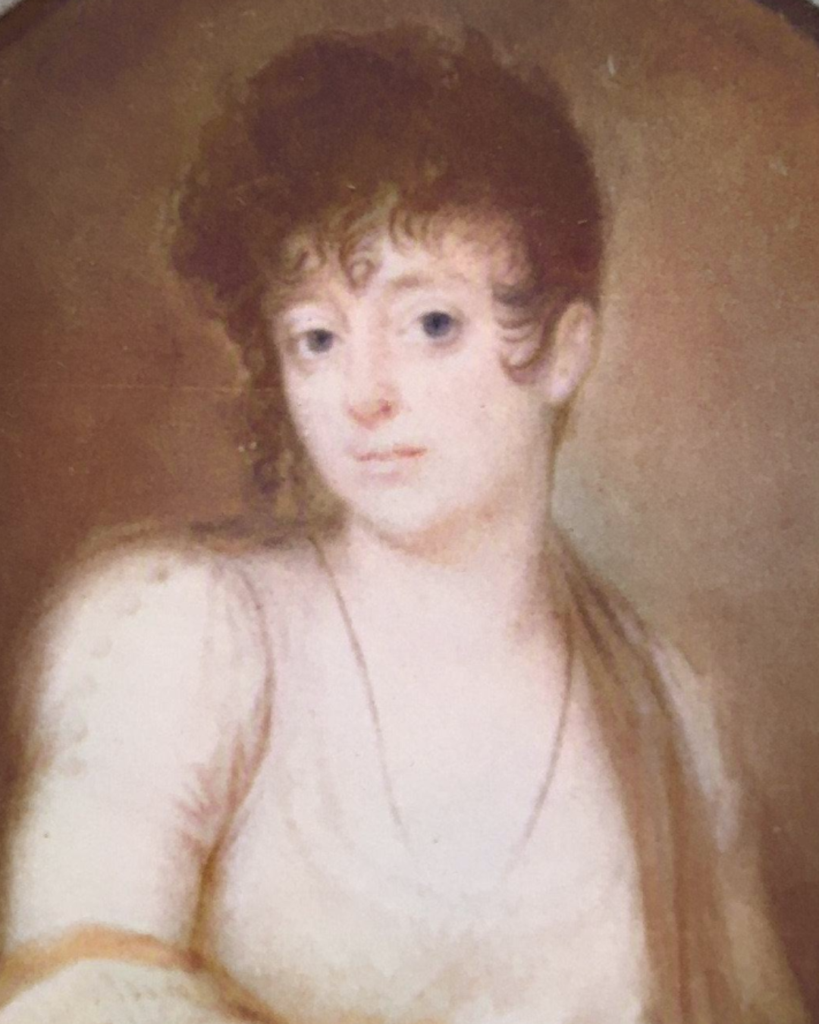
If you have watched the BBC/Canal+ series Marie Antoinette—or seen it on PBS Masterpiece—you may have wondered about the handsome Swedish aristocrat who captured the queen’s heart.
His name was Count Axel von Fersen, and he met Marie Antoinette at a masked ball when they both were 18 years old.
Fersen is remembered as Marie Antoinette’s devoted confidant: the elegant young count who moved through the glittering world of Versailles, became entangled in the French royal family’s desperate attempt to escape the Revolution, and carried the memory of the queen long after her death.
But you may not know his connection to Jacquette Gyldenstolpe, the heroine of my historical novel, Butterfly Games.
In Sweden, years after Marie Antoinette went to the guillotine, Axel von Fersen fell in love again. The woman was Emilie de Geer—Jacquette Gyldenstolpe’s beloved Aunt Emilie, the woman who helped raise her at Finspång Castle.
And in June 1810, only days before Fersen was murdered by a mob in Stockholm, he was at Finspång with Emilie and young Jacquette.
That final visit became the inspiration for my prequel short story, The Marshal’s Warning, which I am offering as a free gift to my newsletter readers. Get it by joining my mailing list here.
Axel von Fersen and Marie Antoinette
Axel von Fersen was born into one of Sweden’s most distinguished aristocratic families. Young, handsome, wealthy and sophisticated, he was entirely at home in the international world of eighteenth-century royal courts.
He met Marie Antoinette at a masked ball in Paris in 1771, when they were both eighteen years old. Over the years, their relationship deepened into an attachment that has fascinated historians ever since. Were they lovers? The question remains debated. What is not difficult to understand is the force of their bond.
When the French royal family attempted to escape Paris in June 1791, Fersen helped organize the plan and drove their carriage during the first part of the journey. The flight ended disastrously at Varennes. Louis XVI and Marie Antoinette were returned to Paris; two years later, both were executed.
Fersen survived. But survival is not the same as escape.
By the time he returned permanently to Sweden, he was no longer simply the dazzling courtier who had once charmed a young queen. He was a man who had watched the ancien regime collapse, who had lost someone he loved, and who had discovered that rank and privilege offer very little protection when politics turns vicious.
Jacquette’s Aunt Emilie
Emilie de Geer was born at Finspång in 1782, the daughter of Jean Jacques de Geer and Aurora Taube de Geer. Finspång Castle was a place of beauty, culture and industry: an elegant country house surrounded by gardens, but also the center of the family’s ironworks.
Emilie entered court life young. She was a maid of honor, played the harp beautifully, and belonged to the same world of music, performance and aristocratic sociability in which Fersen had always moved.
Fersen first mentioned Emilie in his diary in 1795. After returning to Sweden from abroad in 1799, he saw more of the de Geer family. By 1806, his attention had fixed upon Emilie.
Their relationship was not a simple one. Fersen loved her, visited her, wrote to her, and gave her gifts. Emilie did not apparently intend to become his mistress without the security of marriage. That distinction matters. To call her simply “his lover” makes the story sound tidier than it was. She seems instead to have been his last great romantic attachment: the woman he hoped might offer him a new life after a lifetime of loss and political entanglement.
There is one gift in particular that astounded me.
In 1807, Fersen gave Emilie a harp associated with Marie Antoinette.
Just think of it: an instrument linked to the queen of France, brought into the Swedish countryside and placed in the hands of the woman Fersen now loved. Later that summer, a visitor passing the orangery at Finspång heard Emilie playing her harp in a minor key.
As a novelist, I could scarcely ask for a more haunting image.
Jacquette at Finspång
This is where Axel von Fersen’s history touches Jacquette’s own.
Jacquette Gyldenstolpe was born in Stockholm in 1797, into a family closely connected with the Swedish court. By 1806, after her grandmother’s death and amid strains in her parents’ marriage, Jacquette and her brothers were living at Finspång under Emilie’s care.
Emilie was not a distant aunt who appeared at Christmas with a present and a kiss. She helped educate Jacquette. She taught her to dance, act and play the harp (probably Marie Antoinette’s harp). She provided the daily stability that Jacquette’s own glamorous, complicated parents could not always give her.
So when Axel von Fersen visited Finspång, Jacquette was there.
She would have known him not only as the famous Swedish count associated with Marie Antoinette, but as Aunt Emilie’s visitor and a close family friend.
In 1807, he came to Finspång with a gray mare for Emilie and celebrated midsummer with the household. Jacquette was ten years old.
By 1810, she was nearly thirteen—and old enough to understand when something was terribly wrong.
A Country in Crisis
Sweden in 1810 was a nation in turmoil.
The previous year, King Gustav IV Adolf had been overthrown in a military coup after the catastrophic loss of Finland to Russia. His young son, once heir to the throne, had been excluded from the succession. The country needed a new crown prince, and the decision divided political factions still bruised by war, humiliation and fear.
Axel von Fersen was identified with the Gustavians: those who remained loyal to the deposed king’s family and particularly to the claims of his young son.
Then, on May 28, 1810, Sweden’s newly chosen Crown Prince Carl August died suddenly after falling from his horse during military exercises.
Rumors exploded almost immediately.
Carl August had been poisoned, people whispered. The Fersens had done it. Axel and his sister Sophie had murdered the crown prince to restore the Gustavian heir.
There was no truth in the accusation. But truth is not always the strongest force in a frightened and divided society.
Pamphlets and poems spread through Stockholm. One particularly poisonous piece, The Foxes, accused Axel and Sophie von Fersen of the crime. Anonymous threats followed.
On June 12, Axel received a letter addressed to him as Marshal of the Realm. It called him a scoundrel, mocked his survival of the guillotine in France, accused his sister of poisoning the crown prince, and warned that what had not yet happened still could happen.
“The murder of Crown Prince Carl August will be avenged,” it declared.
Fersen was at Finspång.
With Emilie.
With Jacquette.
The Warning at Finspång
On June 16, a letter reached Emilie from Baron Stackelberg, urging her to persuade Axel not to lead the crown prince’s funeral procession in Stockholm.
The danger was no longer vague. It was immediate.
Emilie tried to make Fersen stay. She urged him to pretend to be ill rather than return to the capital for the funeral. Even the blacksmiths at the Finspång ironworks reportedly pleaded with him not to go.
Imagine that scene.
The man who had once risked everything for Marie Antoinette was being warned, in a quiet Swedish country house, that his own life was in danger. The woman who loved him could see the threat clearly. The working men at her family’s ironworks could see it too.
And nearby was Jacquette, not yet thirteen, watching the adults around her become fearful.
Fersen would not remain at Finspång. He was Marshal of the Realm. Escorting the dead crown prince through Stockholm was his duty.
In my short story, The Marshal’s Warning, this is the emotional heart of the tale: not simply that Fersen was doomed, but that Jacquette encountered him at the very moment when love, political loyalty and danger became impossible to separate.
What might a man like Fersen have said to a girl like Jacquette?
A man who had known a queen. A man who had failed to save her. A man now faced with a choice between hiding from danger and riding directly into it.
History gives us the setting, the people and the terrible outcome.
Fiction gives us permission to imagine.
Axel von Fersen’s Death in Stockholm
Fersen left Finspång on June 17, 1810.
On June 19, he arrived at Haga Palace and attempted to speak with King Charles XIII about the following day’s funeral procession. The king would not receive him. That evening, Fersen hosted dinner at his Stockholm residence, the Fersen Palace, and behaved as though nothing were amiss.
The next day, June 20, the funeral procession began.
Axel von Fersen rode in his official capacity as Marshal of the Realm. A hostile crowd gathered. Stones and insults gave way to blows. His carriage was attacked; he was dragged through the streets and, despite the presence of soldiers, beaten to death.
He died on the nineteenth anniversary of the royal family’s doomed flight to Varennes.
It is the sort of historical coincidence a novelist would hesitate to invent.
The Story Jacquette Carried
Jacquette lost not only a man associated with her aunt and her childhood home. She witnessed the price of political passion, public rumor and a man’s determination to follow duty into danger.
In Butterfly Games, Jacquette grows into a young woman whose own heart places her dangerously close to the Swedish throne. She falls in love with Prince Oscar, the son of Jean-Baptiste Bernadotte, the French marshal who would become Sweden’s crown prince in the political aftermath of the crisis that took Fersen’s life.
That is one of the astonishing threads in Jacquette’s story.
The girl who watched Aunt Emilie grieve Axel von Fersen would one day fall in love with the heir of the new dynasty that emerged from the old order’s collapse.
Read The Marshal’s Warning Free
I wrote The Marshal’s Warning because I could not stop thinking about those last days at Finspång: Axel, already marked by tragedy; Emilie, trying to keep him safe; and Jacquette, standing at the threshold of a world in which love and power would never be neatly separated.
The story is a prequel to Butterfly Games, and I would love to give it to you as a thank-you for being part of my Readers Club.
Sign up for my newsletter to download your free copy of The Marshal’s Warning.
Then, when you meet Jacquette again in Butterfly Games, you will know what she has already seen—and why the games of the heart are never only games.