
Historical Fiction Book Covers: Butterfly Games: Behind the Scenes
Posted on July 11, 2025 in Behind the Scenes, Butterfly Games
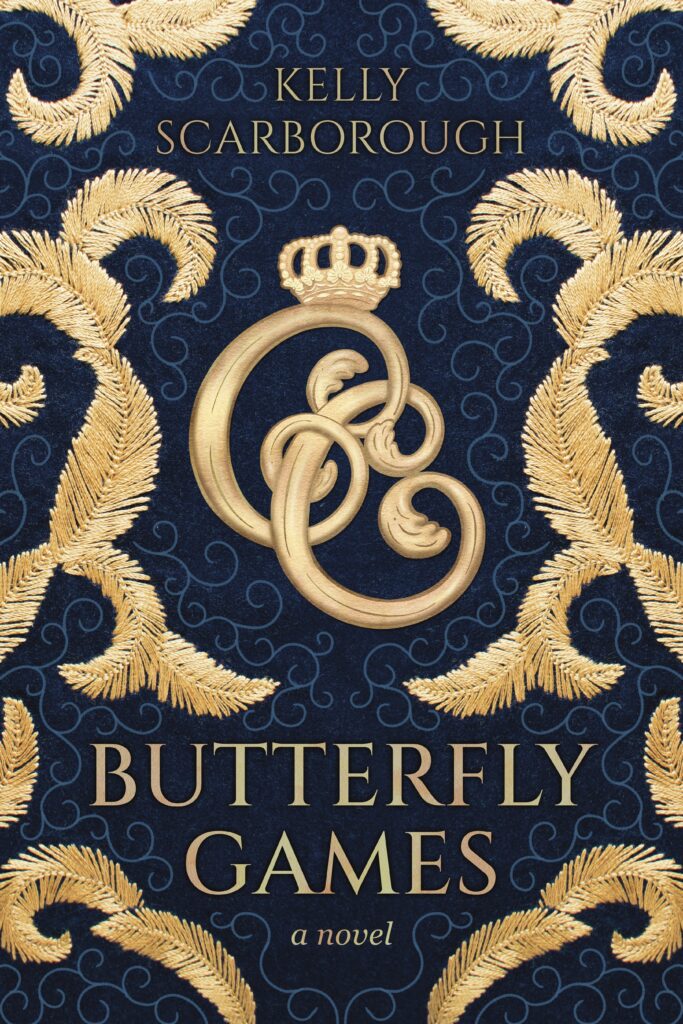
Silver Ferns, Gold Thread, and the Art of a Handmade Historical Fiction Book Cover
When you pick up a great historical fiction book, what’s the first thing you notice? If you’re anything like me, it’s the book cover. That first, split-second impression—do I want to hold this story in my hands? Is this a world I want to inhabit? It’s a little like meeting someone for the first time and knowing instantly: we’re going to click.
So today, let’s go behind the Butterfly Games cover—and more importantly, the gorgeously geeky process that brought it into the world. This wasn’t a stock photo find or a swipe of AI magic. This was embroidery. Real, honest-to-goodness needle-and-thread embroidery on lush, midnight blue velveteen fabric. And I have two exceptional New Zealand-based artists to thank for that: cover designer Holly Dunn and embroidery artist and costume designer Maxence Benoist.
See how it all unfolded.
It Started With a Drawing

Holly Dunn—whose work on historical fiction book covers you’ve probably admired without even realizing it—began, not with fabric or photos, but with her iPad. Using an app called Procreate and its collection of digital paintbrushes, she hand-drew several versions of New Zealand’s iconic silver fern, which is a symbol of resistance and strength, qualities that Jacquette, the heroine of Butterfly Games, has to call upon throughout the novel. These weren’t just sketches—they were painterly, organic, elegant. If you’ve ever tried drawing digitally, you know it’s no small feat to make something feel alive with texture and flow. Holly did just that.
Once she’d created several fern designs, she sent them off to Maxence Benoist.
Enter: Needle and Thread

Maxence is a magician with fabric. You may know her from her costume work—her Instagram is a swoon-worthy collection of embroidery, tailoring, and delightful historical flair. For Butterfly Games, she embroidered three different fern options using metallic gold thread on deep, midnight blue velveteen. Yes, you read that right. That luxurious background isn’t digitally faked; it started with real velvet. Real gold thread. Real stitches.
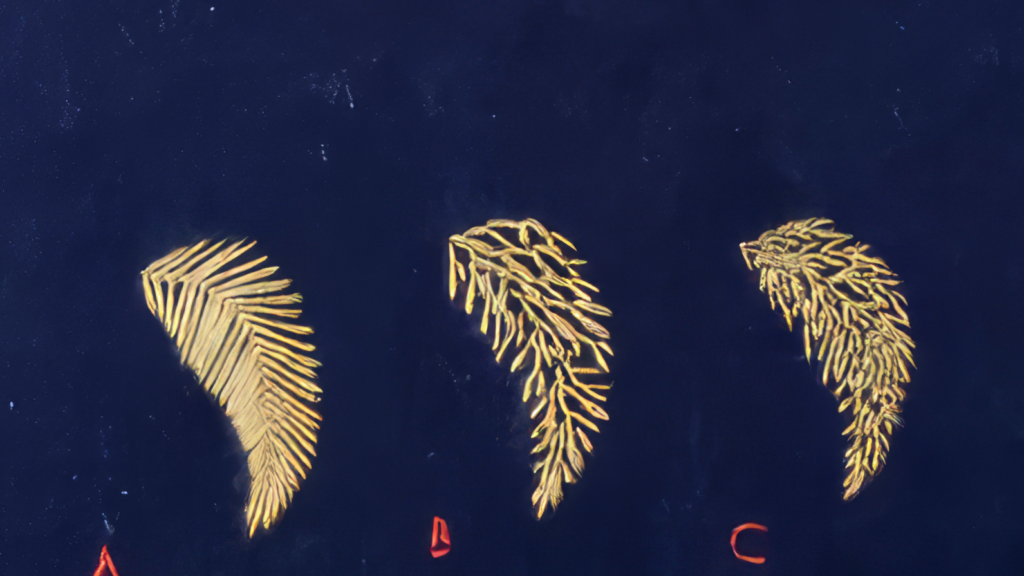
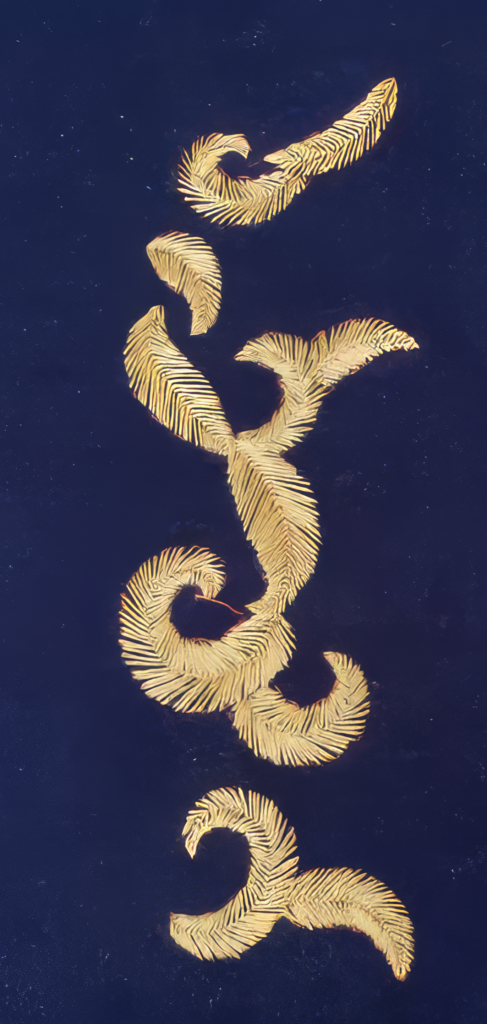
To prepare the fabric, Maxence used interfacing (a kind of backing) to stabilize the velveteen, then stitched the embroidery by hand. The results? Shimmering, dimensional ferns—each one subtly different in composition and movement.
She sent Holly photographs of the finished samples. Holly chose Option A.
Would you have picked the same one? I agonized over them, honestly. Option B has a kind of swoosh to it, like wind through leaves. Option C feels like a secret curling open. But Option A? It has presence. A quiet elegance that says: There’s power here. And beauty. And secrets.
It was exactly right for Jacquette’s story.
From Stitch to Story
Once Holly had her chosen embroidery design, she photographed the fabric and incorporated the design into the full cover layout, adding a hint of texture and gold flecking to frame the text. Perfect for a historical fiction book cover.
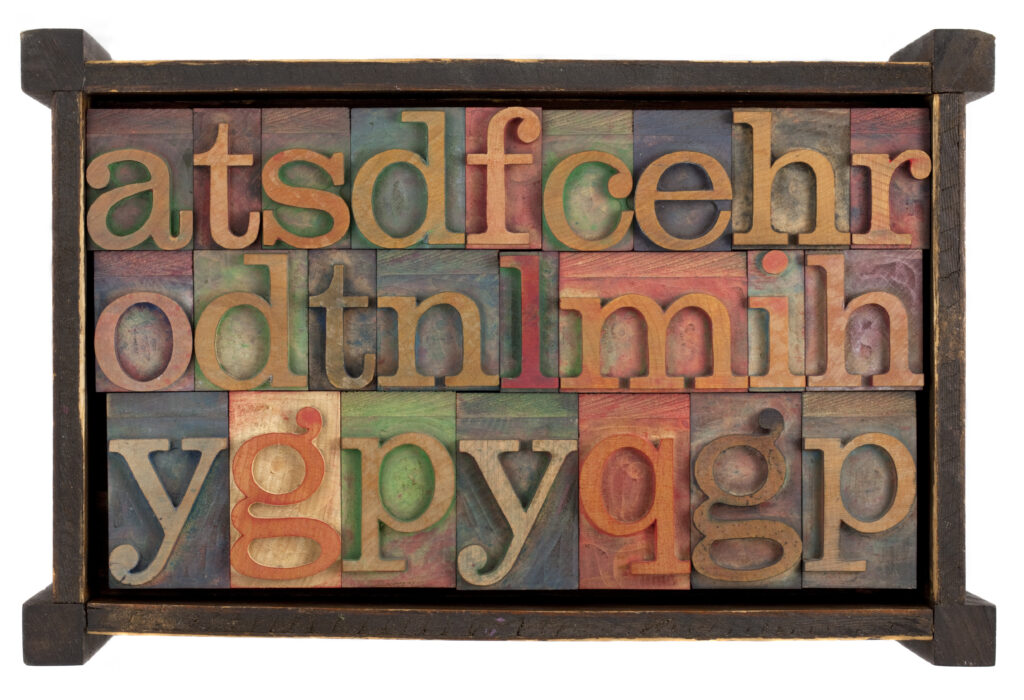
The title typeface is Cinzel—a nod to Roman inscriptional lettering, which gives that whisper of the classical—and the secondary font is Georgia, for readability and grace.
Together, they balance the ornate with the accessible. A little bit of palace. A little bit of tea and scandal.
A Word on Book Covers
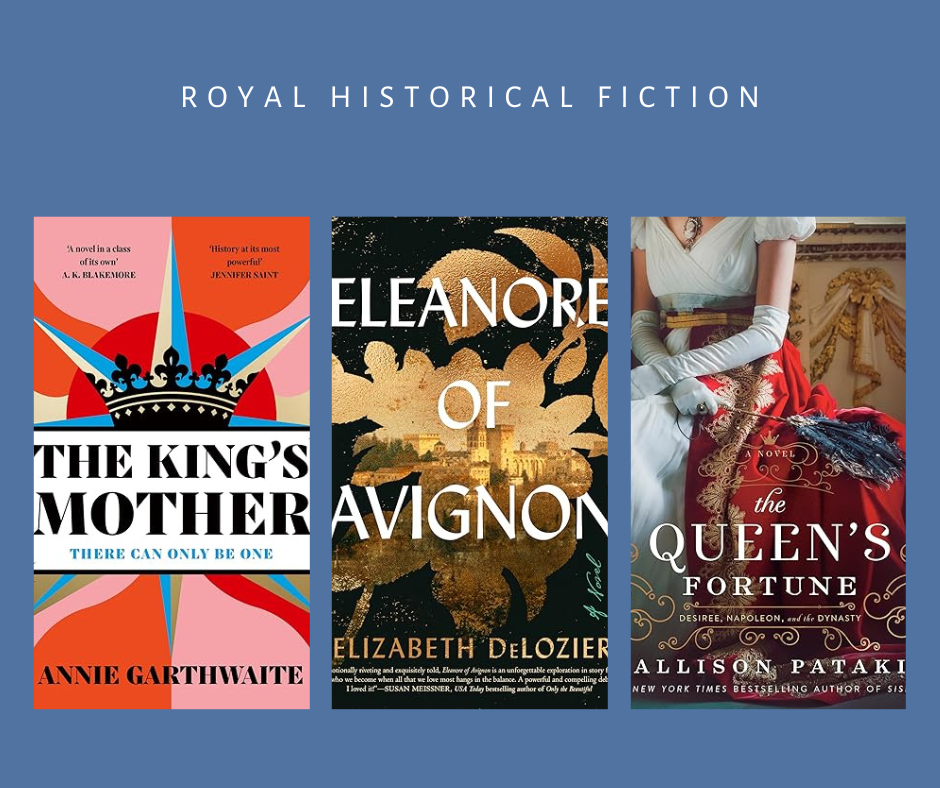
These days, book covers can be made in many ways. Some are made from stock photography: a well-cropped face, a stormy sky, a bit of moody lighting. Some pull together illustrations of surreal dreamscapes or period costumes with a few well-placed prompts. And some, like Butterfly Games, are custom made—every detail crafted by hand, eye, and heart.
Aren’t the ones in the photo to the right beautiful?
There’s no wrong approach, truly. But I’ll admit, I have a soft spot for the tactile, the human-made. For the gold thread that catches the light. For the fern drawn one digital brushstroke at a time. For the hours that go into something you’ll hold for just a moment before turning the page.
So, tell me—which fern would you have picked?
The Cipher Fit for a Queen
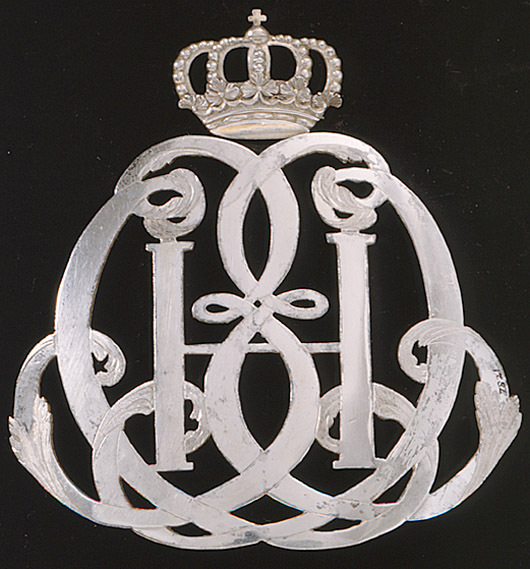
You may have noticed the golden monogram, sometimes called a cipher—or namnchiffer, in Swedish—glowing at the heart of the Butterfly Games book cover like a royal seal. This intricate cipher was hand-drawn by Holly Dunn and inspired by a real 19th-century insignia: the brooch worn by the ladies-in-waiting to the Queen of Sweden, Hedvig Elisabeth Charlotta, in the 1810s (see photo for the original).
For the fictional Queen Charlotte in Butterfly Games, Holly reimagined the cipher pin in a more lyrical, entwined style—think less strict symmetry, more secret message written in calligraphy. The cipher’s crown isn’t just decorative; it signals the power dynamics threaded through the novel: who holds influence, who wears the mask of loyalty, and who is playing the long game.
And here’s how it all looked when it came together:
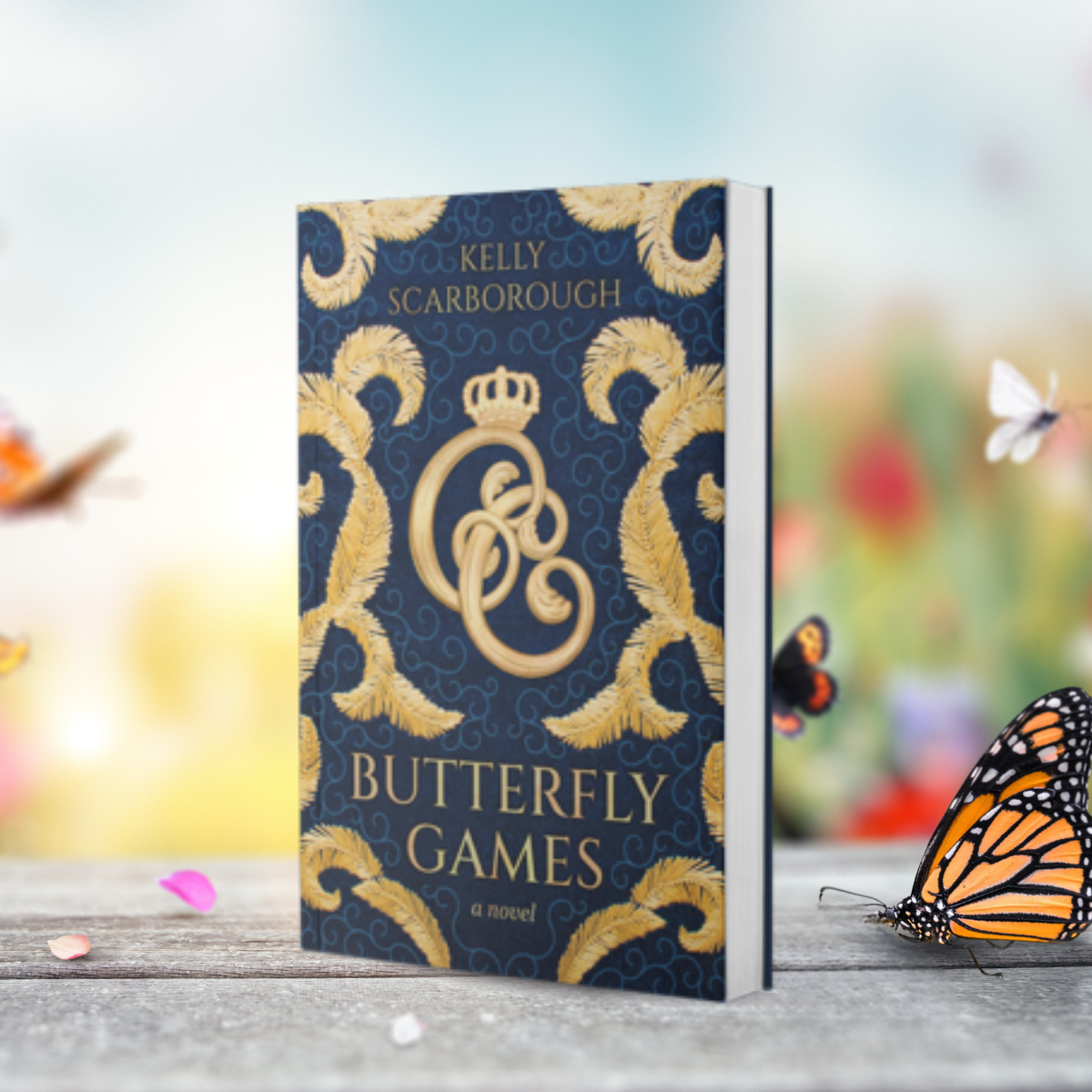
I was so privileged to draw on the talents of these two amazing artists! What do you think of their work? Right now, they are busy designing the cover for Butterfly Games Book 2, so I’d better get back to writing…
Want to get your own copy of Butterfly Games and see its beautiful cover for yourself when it’s published on January 20?